
Why $6,000 Gold is Closer Than You Think
The Iran conflict didn't trigger the gold supercycle—but the global rebellion against the US dollar will.

Miguel Portillo
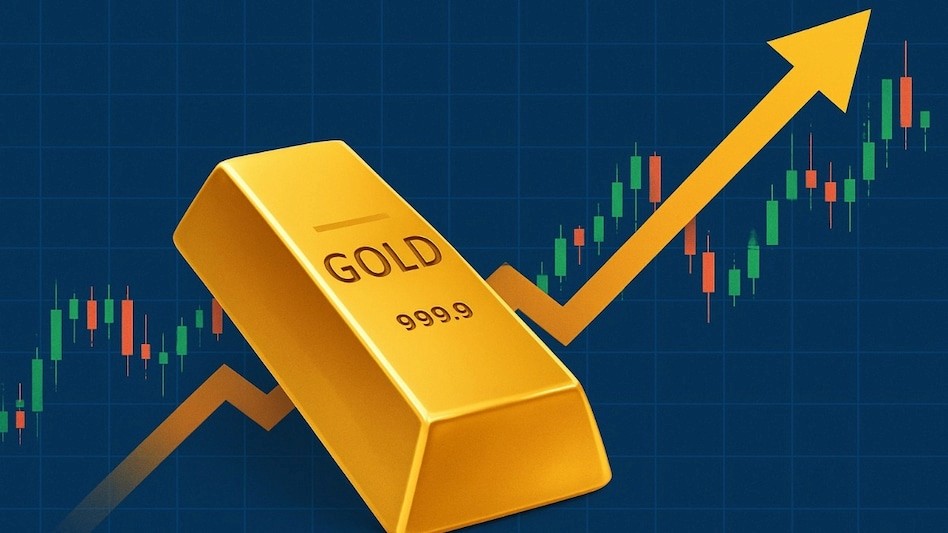
With gold currently trading in the mid-$4,200s, the question echoing across trading floors and retail forums alike is singular: When will Gold reach $6,000?
To answer that, we have to look past the noisy daily headlines and focus on the quiet, structural shifts rewiring the global financial system. The catalyst for the next massive leg up isn't what most investors think it is.

The Iran War: A Letdown for Gold Bugs
If you held gold through the recent Iran war, you likely experienced a wave of frustration. Historically, the playbook says that major geopolitical conflicts send safe-haven assets straight into the stratosphere. Yet, gold's price action during the conflict was decidedly muted, leaving many gold bugs disappointed and searching for answers.
Why didn't gold launch to the moon?
The Liquidity Squeeze: During sudden, acute geopolitical crises, institutional investors often face steep margin calls across their broader portfolios. To raise cash quickly, they sell their most liquid, profitable assets—which frequently includes gold.
The "Priced In" Premium: Markets are forward-looking. By the time the conflict officially escalated, the geopolitical fear premium had already been baked into the price over the preceding months.
The Temporary Dollar Flight: Initial panic often triggers a knee-jerk flight into US Treasuries and the US Dollar, creating headwinds for gold in the immediate short term.
Geopolitics can create temporary price spikes, but they rarely sustain long-term supercycles on their own.
The Real Catalyst: The Great Dedollarization
If war isn't the trigger for $6,000 gold, what is? Dedollarization.
The world reserve currency is rapidly losing its luster. For decades, the US Dollar enjoyed unchallenged supremacy. However, in recent years, the dollar has been heavily leveraged as an economic weapon. The widespread use of sanctions and the freezing of foreign reserves sent a chilling, unmistakable message to the rest of the world: holding your wealth in dollars comes with strings attached.
As a direct result, the true population and economic centers of the world are actively pivoting away from the fiat dollar system.
The Major Players | Their Strategy |
China & Russia | Liquidating US Treasuries and aggressively accumulating physical gold to insulate their economies from Western sanctions. |
India | Increasing bilateral trade in local currencies and aggressively boosting sovereign gold reserves to hedge against dollar volatility. |
African Nations | Seeking resource-backed financial sovereignty and adopting gold as a neutral, non-weaponized reserve asset. |
This isn't a temporary trend; it is a permanent rewiring of global trade. As these massive economies bypass the SWIFT system and dump dollars in favor of gold, the resulting demand shock is the true fundamental driver that will ultimately push gold past $6,000.

The Bumpy Road Ahead: Our Game Plan
While the macroeconomic backdrop makes me incredibly bullish on gold, the journey to $6,000 will not be a straight line. The market will undoubtedly throw us curveballs, and we must expect a bumpy road ahead.
Patience and strategic capital deployment are vital. While prices are currently hovering higher, when Gold hits $4,000 again, I will definitely be a buyer.
My strategy is simple:
Initiate a strict Dollar Cost Averaging (DCA) strategy around the $4,000 level.
Aggressively increase exposure and scale into heavier positions if we see dips below $4,000.
By keeping some powder dry for these inevitable pullbacks, you position yourself to capture maximum upside when the dedollarization narrative fully breaks into the mainstream consciousness.
Become a member today, we watch the charts for you and send you the exact entry levels, so you never miss a trade, In 2022, our Gold trades delivered 37% returns to our clients.


